
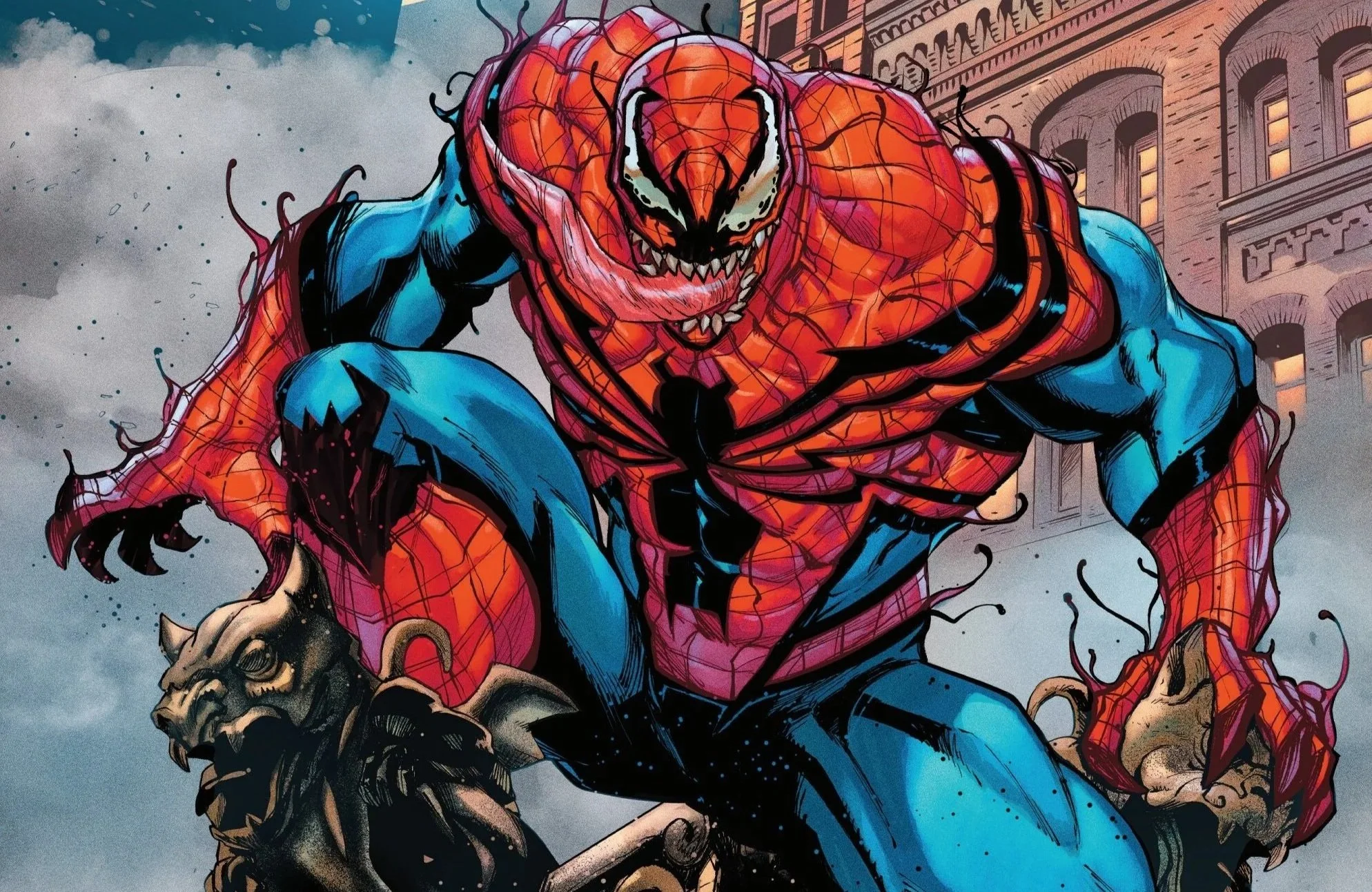
We’ve got a lot of symbiote shenanigans happening around the pages of Marvel these days, so what’s not to like about another little addition to the alien family? Well, that’s the real question we find ourselves answering with Web of Venom #1, a fun little one-shot that brings back a recent costume design that Venom had gone with…and puts it on another Marvel character that has quite the beloved fanbase as well.
The result? A perfectly serviceable short story, but one that really doesn’t do anything new or add much beyond a couple of interesting concepts that are bogged down by the most cookie-cutter of storytelling. To get that out of the way, though, there is fun to be had in this book, and while the initial twist of who this new Spider-Venom-inspired “hero” is is quickly put aside, it’s a book that’s meant to be enjoyed in the moment and not really beyond that unless they really fix some of the blander aspects going on here.
New Freak of the Week
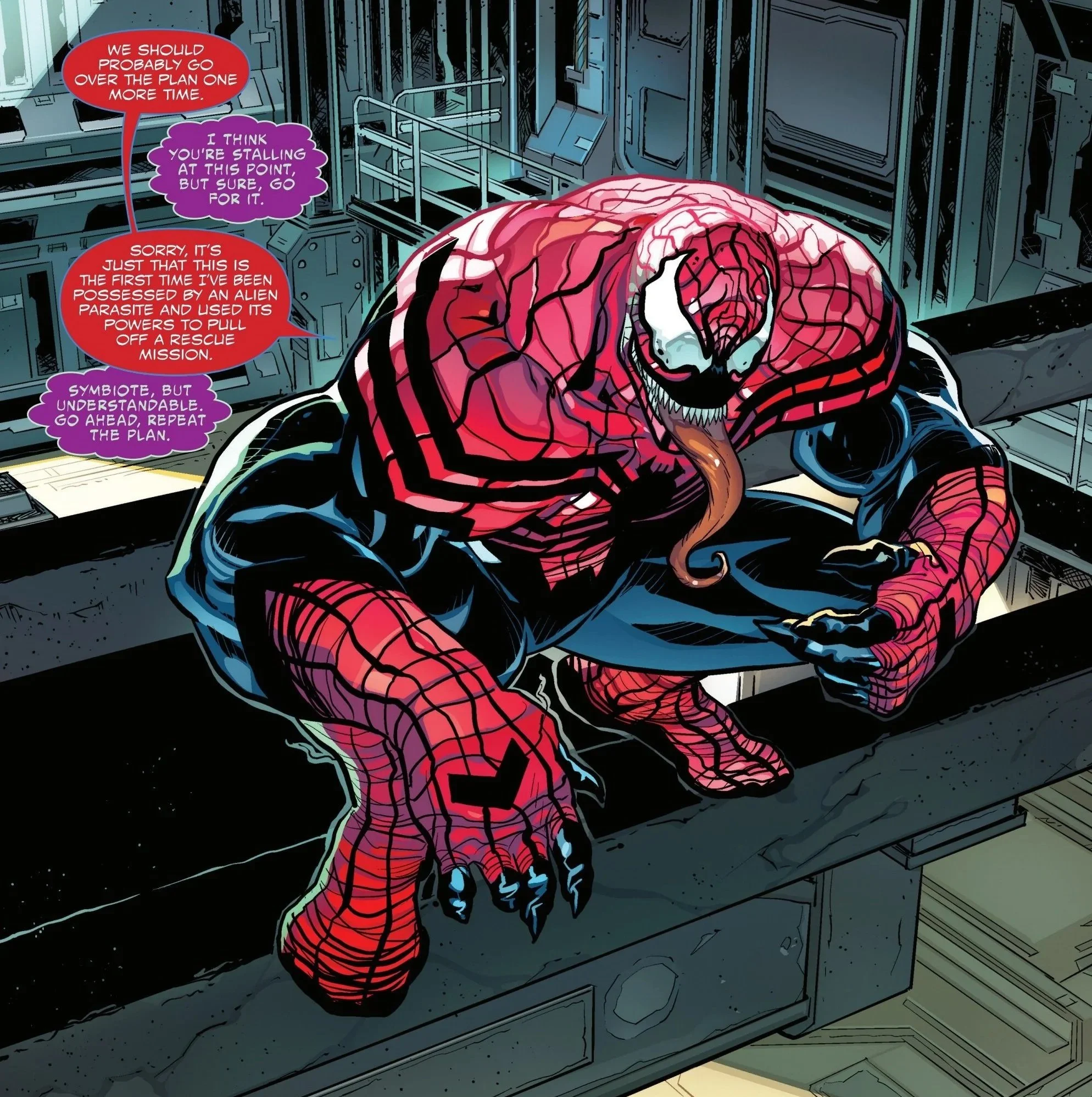
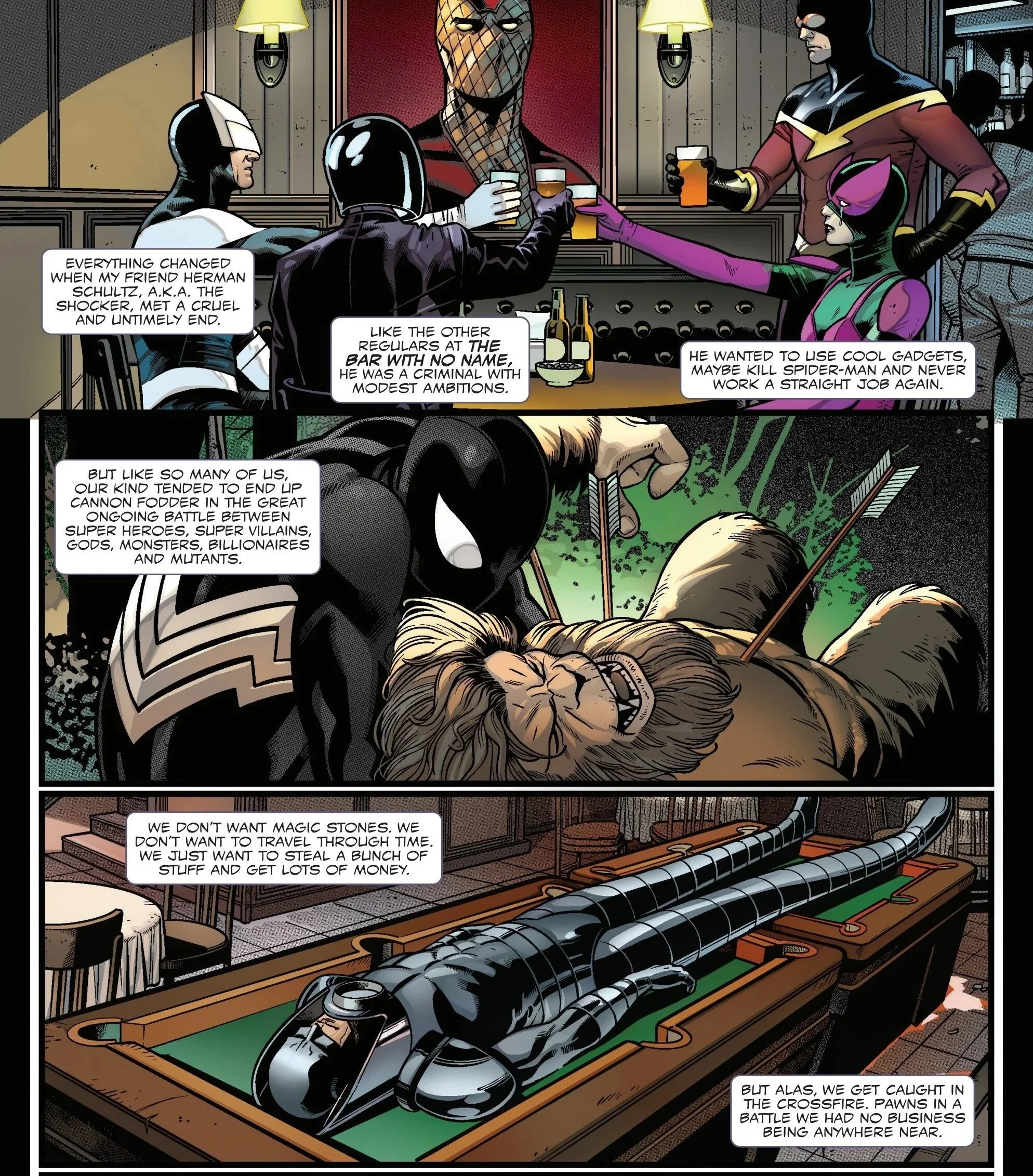
Our newest Spider-Venom hero starts off his little story in the thick of it: he’s about to “rescue” some of his friends, but he can’t help but monologue about how he got to this point. There’s a tad bit of boomerang storytelling here (ooooh, foreshadowing), starting off with who the hero under all the red, black, and blue slime is. The symbiote in question in this pairing finds the sudden urge to reflect on their past very weird, but Spider-Venom insists that it’s necessary to get their head in the game, so onward they go. After quickly dispatching a few guards with their symbiotic powers and new Venom-rangs, the flashback starts in earnest: yep, the new Spider-Venom is actually Fred Myers—more lovingly known as Boomerang. Boomer recalls how he got here: after Shocker’s death and grappling with his own recent resurrection, he decided to go back to petty crimes, avoid the old supervillain bar, and basically restrict himself to the quiet life of the suburbs. It’s short-lived when his buddy Overdrive comes to offer him a chance to upgrade his powers through a new initiative started by Tombstone: using alien tech to do the dirty work of turning D-list villains into real superpowered freaks. While Boomerang himself doesn’t want any part of it, he joins Overdrive at the clinic, where he meets an unexpected guest: an alien symbiote by the name of Passenger, who’s been stuck in a jar for more than 200 years without a host and somehow knows modern lingo. When the clinic is raided and Overdrive is captured, Boomerang and Passenger become an unlikely duo in the process, making their escape and later deciding to save their friend from the Aberrant Crimes Task Force that kidnapped Overdrive. But before all that, Passenger and Boomerang settle on some “legitimacy” by choosing the Spider-Venom look.
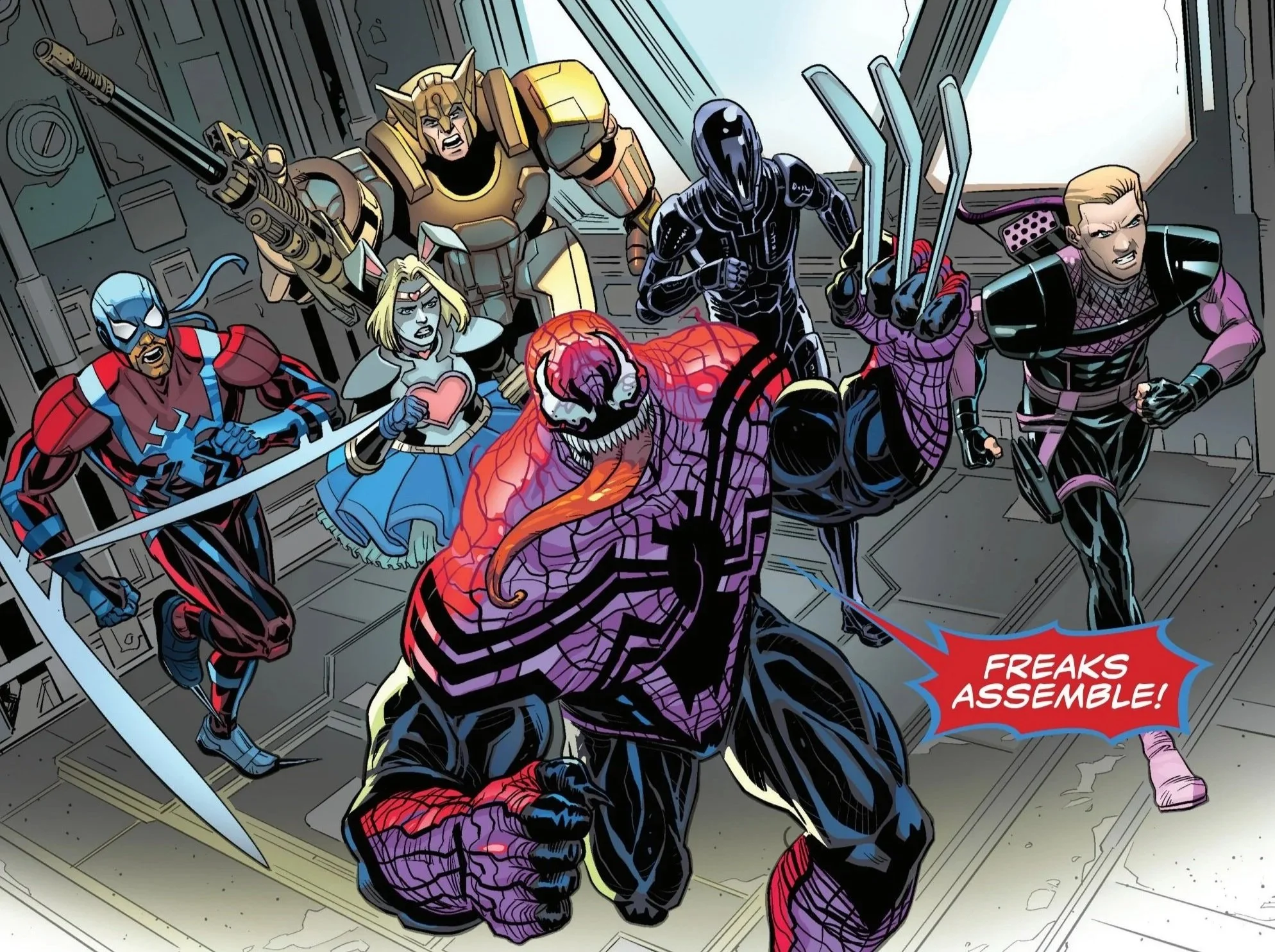
That’s how we find ourselves back in the present: with Spider-Venom now about to save Overdrive and a few other villains who were being imprisoned. But things get complicated fast when Hawkeye shows up to foil those plans, followed by Tombstone, who wants to get his superpowered villains back under his control. Boomerang, of course, decides to be a revolutionary at that point and momentarily teams up with Hawkeye and the other heroes to beat Tombstone and make their escape. The book ends with Boomerang and Passenger agreeing to continue their partnership, but their plans might be cut short by the arrival of a whole gaggle of wizards, led by the Sorceress Supreme, Wanda Maximoff. And she wants Passenger and Boomerang to come with her—or else!
There’s No Reinventing the Wheel Here
To be very clear here, Jordan Morris set out to write a pretty straightforward and fun book, and he definitely succeeds in telling a good one-shot story that’s just clean, mindless fun from start to finish. However, with that being said, if you try to look at it a little too much, you start to see things come apart a bit too quickly. There’s a lot of tired and retreaded tropes we’ve seen a hundred times over, some weird continuity errors that would make the entire premise of the newest symbiote on the block fall apart, and there’s also the dreaded oversaturation of MCU humor that undercuts some of the more genuinely fun moments of writing this book has to offer.
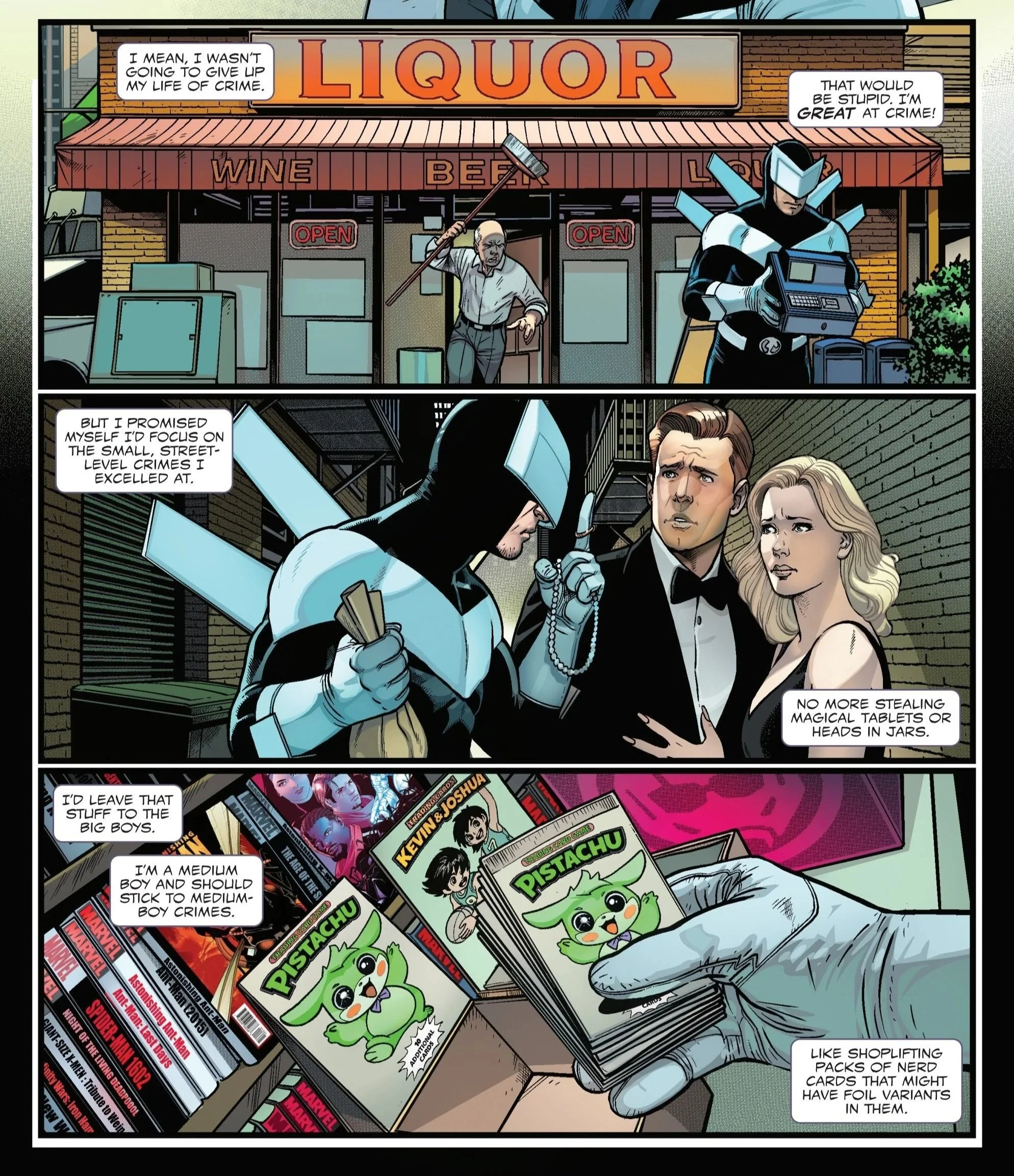
First and foremost, let’s talk about the main player here: Boomerang. Ever since Nick Spencer reinvented the character in the pages of his Amazing Spider-Man and Superior Foes runs, there’s been a genuinely beloved nature to Fred Myers’ misadventures. For the most part, Morris builds on this foundation with some surprising pathos. There’s a great couple pages during Fred’s monologue that highlight where his head’s at right now: grieving the death of his friend—the Shocker—disillusioned with all the big-time supervillain plots that keep getting him and similarly D-list petty criminals killed over table scraps. It’s genuinely heartbreaking and relatable watching Fred shuffle through life with the kind of wry layman humor that’s become a hallmark of the character, and those are genuinely the best parts of the book. His union with the symbiote known as Passenger is where things start to fall a bit out of whack—which is a bad way to start things since this is supposed to be a titular symbiote book. The problem really starts with Passenger being more akin to a comedy foil for a character who’s already a pretty good comedy foil, so you’re essentially having two characters who can’t really play off each other beyond the whole “buddy cop, unlikely allies” deal. Except both allies are flippant as hell beyond a small contrast in ambitions: Freddie wants to stay on the small side of things while Passenger wants to do bigger things with their lives. It’s a story we’ve already seen repeated enough times, and while there are genuine bits of humor like Passenger being genuinely baffled that Fred would do a flashback recap in the middle of their rescue operation, the rest of it feels very bland indeed.
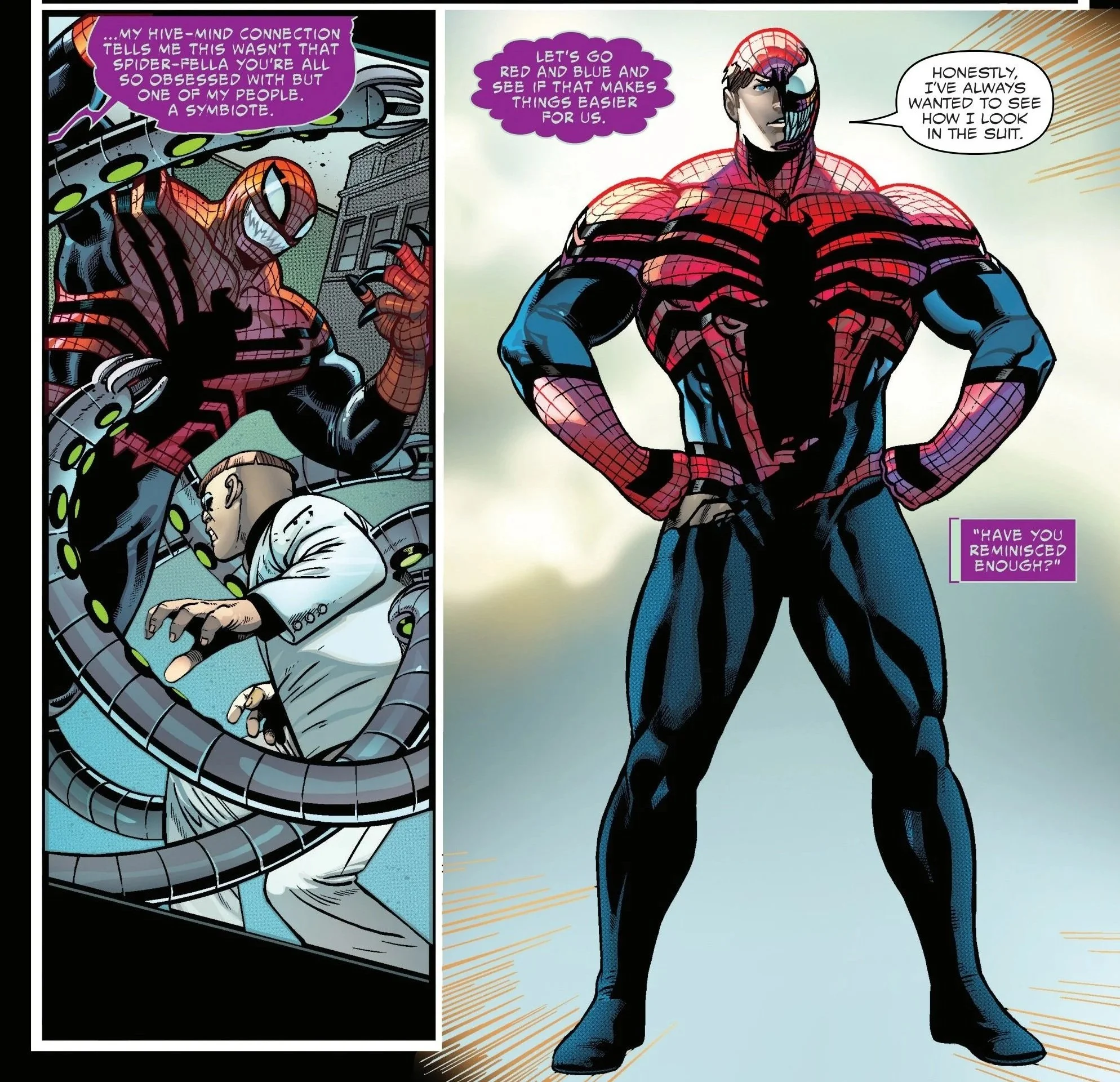
And speaking of Passenger: while the idea of a symbiote that’s been trapped on Earth for 200+ years and exposed to changing human civilization over that period is a great concept to explore, it just devolves far too quickly to be anything meaningful. The first contradiction comes with how Passenger even survived consciously without a host for 200 years, since symbiotes simply cannot function like that outside of their own planet. Secondly, the convenient excuse for Passenger being so up to date on the latest events and lingo is that he was conscious and connected to the symbiote hive mind the entire time, which again simply should not be possible given how he was isolated, as well as everything that’s been going on in wider symbiote mythology over the last few years. Even without these gaping plot holes, there’s far too much from the Venom movies here in this depiction to feel fresh at all. Passenger is a glorified purple (and then Spider-Man-colored) version of Venom from the Tom Hardy movies: there’s honestly no escaping that, and I doubt Morris is shying away from the depiction either. But that laziness essentially robs the partnership of any real meaning, because we’ve seen and heard this song and dance all before. If they’d honestly given Passenger a more unique personality, this might’ve held up better under scrutiny and for future storytelling potential. And this becomes even more of a predicament when you consider just how much more comedic Venom himself has been of late in the pages of his own book. To put it bluntly: every symbiote is starting to feel the same, when they really shouldn’t.
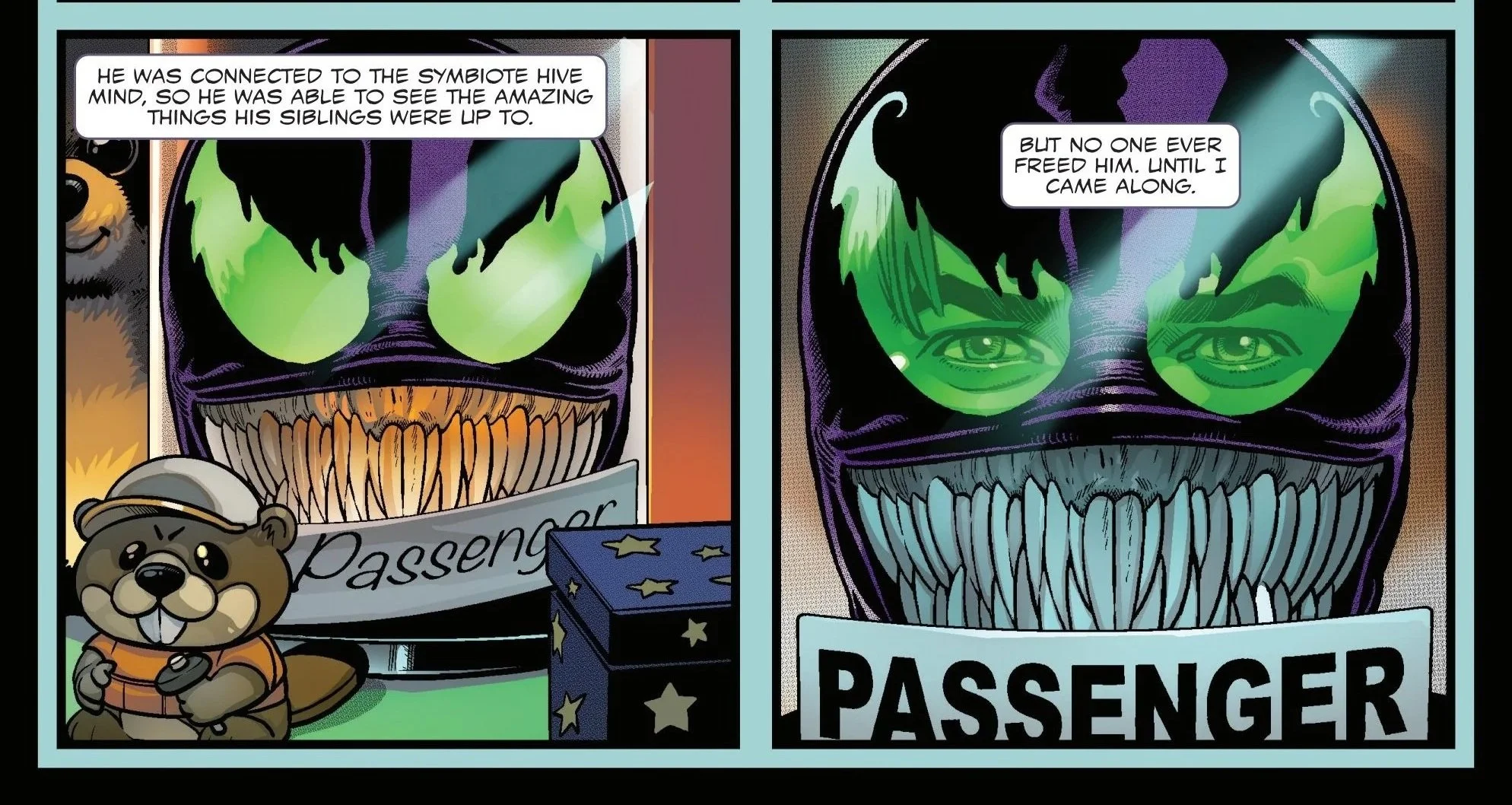
As for the major story itself, it’s a brisk, self-contained hero’s journey-esque origin narrative that plays the hits you’re already used to. There’s action, there’s friendship, there’s the mandatory new hero meets, fights then teams-up with established superhero to overcome bigger challenge (i.e. with Hawkeye against Tombstone). And if your mileage is on that some of the genuinely funny humor scattered throughout (Passenger being genuinely psyched at the idea of fighting an Avenger), then Morris’ little adventure is for you. There’s also a lot of potential with an intriguing cliff-hanger involving Wanda and the other Sorcerers being interested in Passenger, but unless that storyline is given a tighter and more coherent narrative it’ll end up being just as repetitive and by the numbers as this one shot.
Perfectly Serviceable Art
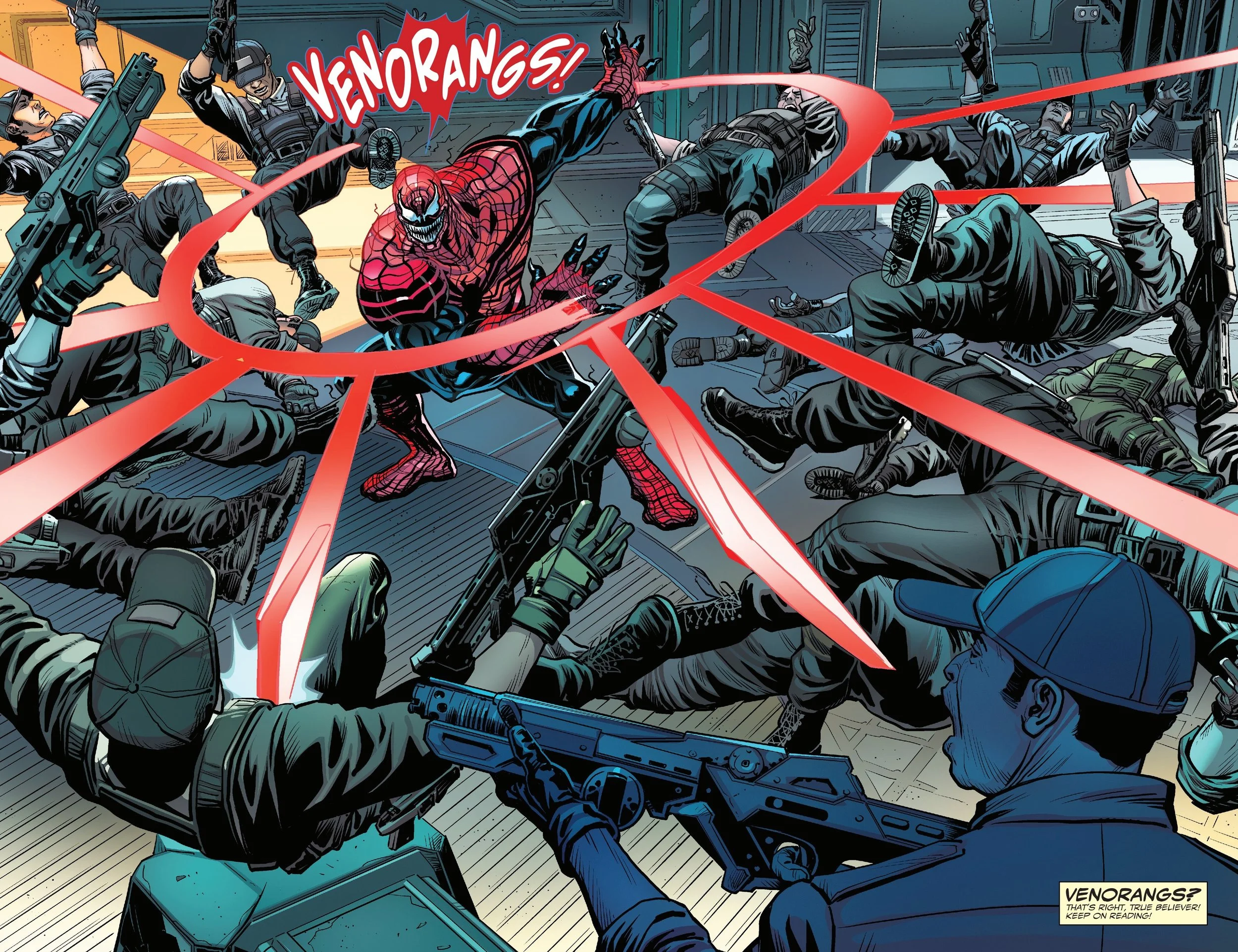
What can I say about the art in this book? Well, just that Luke Ross and Ramon Rosanas’ line work is perfectly clean and makes so much of the action easy and fun to follow. Coupled with David Curiel’s color work, and you’ve got a fun little book on the visual front.
Ross and Rosanas don’t go for any particularly big artistic swings, choosing to keep things as simple and clear as possible. Every character is distinctly presented, and a lot of Boomerang/Passenger’s humor is conveyed through some fun physical comedy that the artists are able to convey pretty well. There’s a pretty fun double-page splash of Fred chucking a whole bunch of “Venom-Rangs” at enemies that looks pretty cool, as well as a fun Wolverine homage, but otherwise there’s really not much to say beyond that. Once again, just like Morris’ writing, there’s far too much aping of the visual talking-heads aesthetic with Passenger that the Venom movies made a mainstay when it comes to symbiote portrayals in books. There are some fun designs for the upgraded “villains” here too, but again nothing particularly revolutionary or truly eye-catching. Even the whole conceit of the Spider-Venom costume being settled on is more fun in concept than final execution. Honestly, I think them switching to a build and costume design that better fit Boomerang by the end of the issue would’ve been a more unique way to go.
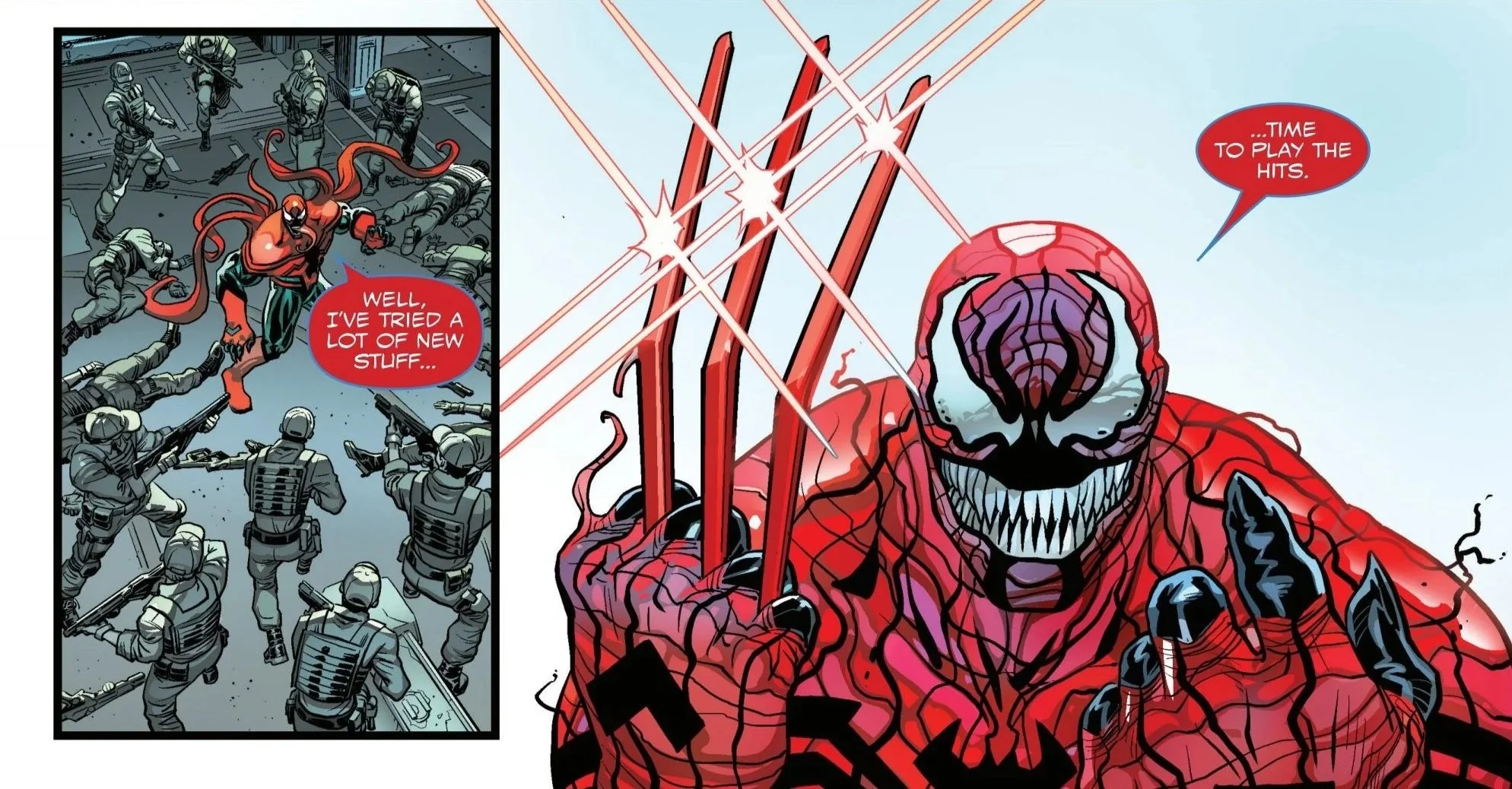
Curiel’s colors are also pretty standout, because this is definitely a very colorful book, so he makes the effort to have every character really pop out. The flashback sequences are appropriately dourly shaded with a sepia-ish tone, and that feels perfect considering the message Boomerang is trying to convey. But beyond that, all of the other color work matches the rest of the story elements: clear-cut, simple and playing it safe. And there’s honestly not really much to write home beyond that.
Boomerang Storytelling
Web of Venom #1 can’t even be said to have ambitions that the story cannot reach: because it really doesn’t seem to. Morrison and company seem more focused in telling as simple a point A to B origin story as possible with the new characters and design that Marvel has provided them with, which is such a tragedy considering the potential there is for both Boomerang’s new stage in life, plus the experiences of Passenger.
Instead, readers will get a paint-by-the-numbers story that ends on a genuinely interesting cliff-hanger that may or may not amount to something meaningful. I’m not sure if I want to see this dynamic new duo on their “buddy cop” adventures again, but I’m genuinely hoping there’s more bite to the story when they do come back on the scene, because right now – as fun as some of this book is – it’s really feeling more flat than fantastic.
Final Verdict: Web of Venom #1 is a fun one-shot in the moment with a new lease on life for a beloved Spidey character, but it doesn’t do anything to reinvent the wheel or tread new ground in any real way beyond that initial conceit